Up in the Gods for The Cripple of Inishmaan (2013)
Originally published July 18th 2013
Two years ago one of my closest friends and I went to NYC for the first time. Our trip was planned and centered primarily around this one thing - going to see Dan Radcliffe at the Al Hirschfeld Theater in How To Succeed In Business Without Really Trying. Naturally, we loved the play so much that we ended up spending a large chunk of our holiday dollars on buying another round of tickets with better seats. This year we decided to make the pilgrimage again, this time to see Radcliffe at home in London in the Noel Coward Theatre production of black comedy The Cripple of Inishmaan, a play by Martin McDonaugh.
The Cripple of Inishmaan forms part of their A Season of Five Plays which previously brought new John Logan's new play Peter & Alice starring Judi Dench and Ben Whishaw, a show with more than just a few positive reviews. Quite the act to follow.
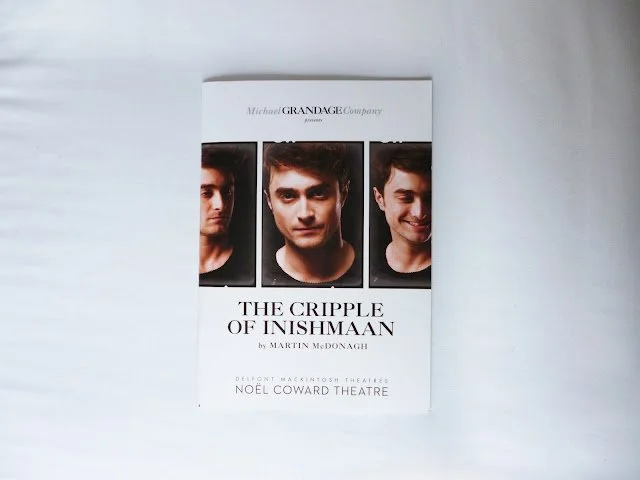
Radcliffe furthers his theatrical credentials in the title role, Billy, the resident 'cripple' of the island of Inishmaan - an incredibly physical part acted so well I hope Radcliffe isn't suffering too much with muscle tension post-performance, especially if he is exercising Method techniques for it. The Cripple of Inishmaan is set on the Inishmaan of 1934, exposing the unashamed small-town eschewing of political correctness (everyone nonchalantly refers to Billy as 'Cripple Billy' despite his protestations that he is just Billy), the novelty of the arrival of outsiders into the community, and that age old phenomena of the local busybody, you all know one - the one that parades as the news bringer but just trades in tittle-tattle. The gossiping together with the appearance of a Hollywood film crew (based upon the real filming of The Man of Aran in Ireland in the 1930s) amongst the locals culminates in a boy-that-cried-wolf type scenario, maintaining a careful equilbrium between frequent laughs and familial sentimentality.
The real comedy of TCOI lies in the insistant repetition of dialogue delivered fast in Irish dialect, usually dialogue that is about nothing much. Billy likes a spot of cow-watching and so this inane activity is constantly referred to. Billy's Aunts witter on and on in the way everyones Aunt does. They stock only tins of peas in their local family-run shop, forming a musty brown Warhol style shop tableau. They too suffer under the ramblings of a telescope-obssessed school-boy and the ever eavesdropping Johnnypateenmike. McDonough writes these unembellished characters in such a pure, uncensored way that the second they speak, you know them.
The main problem with the play is the characterisation of Helen (played by Sarah Greene), a sweary two-dimensional bully who happily discusses her introduction to male genitalia through flashing priests, and takes great delight in torturing her younger brother Bartley, at one point smashing a number of eggs over his head. The scene is set as a comedic interlude but her harsh behaviour is never revisited. Her eventual acceptance of a date with poor Billy (after horribly rejecting him with a high-pitched giggling fit) could be her moment of existential change, but she is such an unlikeable exaggeration of a fierce bully, a depiction that never ventures toward any psychological reasoning for her conduct, that I found the concept of innocent Billy being so in love with her more annoying than sweet or funny. The other typical small town characters like Billys' Aunts (Ingrid Craigie and Gillian Hanna), one of whom develops a bizarre conversational friendship with a stone, all have their own problems and repetitive mannerisms but are perfectly aware of them. This makes them not only more appealing but much more Irish and even slightly British in tone. Helen seems oblivious to the era of irritation that she reigns and doesn't show any signs of changing.
The smooth rotating set design is kept minimal and dank but fairly unremarkable. Radcliffe shines in a touching fever-ridden monologue in a dollar room in America, and Conor MacNeill also stands out as Helen's long-suffering and naive brother Bartley, somehow capable of pulling a laugh from the audience whenever he was onstage. The Cripple of Inishmaan won't tell you anything you don't already know about the intangible pull of and our return to the places we call home. This play isn't a gamechanger. It is a sunshine-tinted study of familiarity with generous lashings of black comedy. And you can't not like that.
The Cripple of Inishmaan ran until 31 August 2013 at the Noel Coward Theatre, St. Martins Lane, London.
★★★☆☆
